Listen naturally
Patients or caregivers speak by phone about symptoms, questions, medication and what has happened since the last visit.

One continuous thread
What happened in care.
What is changing between visits.
What needs to happen next.
The product we are building
Care shouldn't end when the appointment does.
ArioMed is a voice-first, agentic continuous-care platform for patients, caregivers and the clinical teams responsible for what happens next.
It can capture medication adherence, symptoms, questions and care-plan progress; coordinate approved administrative workflows; and escalate important or uncertain situations to a human.
The MVP is in development and will be available for bounded pilots. It does not diagnose, prescribe or independently change a treatment plan.

The invisible workload
Each medication, treatment, appointment and update may be manageable on its own. Together, they create a continuous coordination burden—often carried by the patient or family.
The person receiving care should not have to be the human router between systems that do not talk to each other.
Between-visit workflow
Agentic support for the routine steps; human authority for clinical decisions.
Patients or caregivers speak by phone about symptoms, questions, medication and what has happened since the last visit.
The agent records structured context and can progress approved tasks such as a medication-renewal request to the nursing team.
Important or uncertain situations are routed to the nurse, caregiver or clinical team with the conversation and relevant care context.
Illustrative product experience
Concept · Pre-pilotOne connected workflow for the person receiving care and the team responsible for what happens next.
“I took my morning medication, but I've been more breathless walking around the house.”
Ario organises the conversation and checks the next permitted step.
Founding clinical use case
Concept · Pre-pilotCF care happens every day, while clinical contact is episodic. ArioMed's first proposed pilot connects the patient or parent's voice and daily plan with a nurse-owned review and escalation workflow.
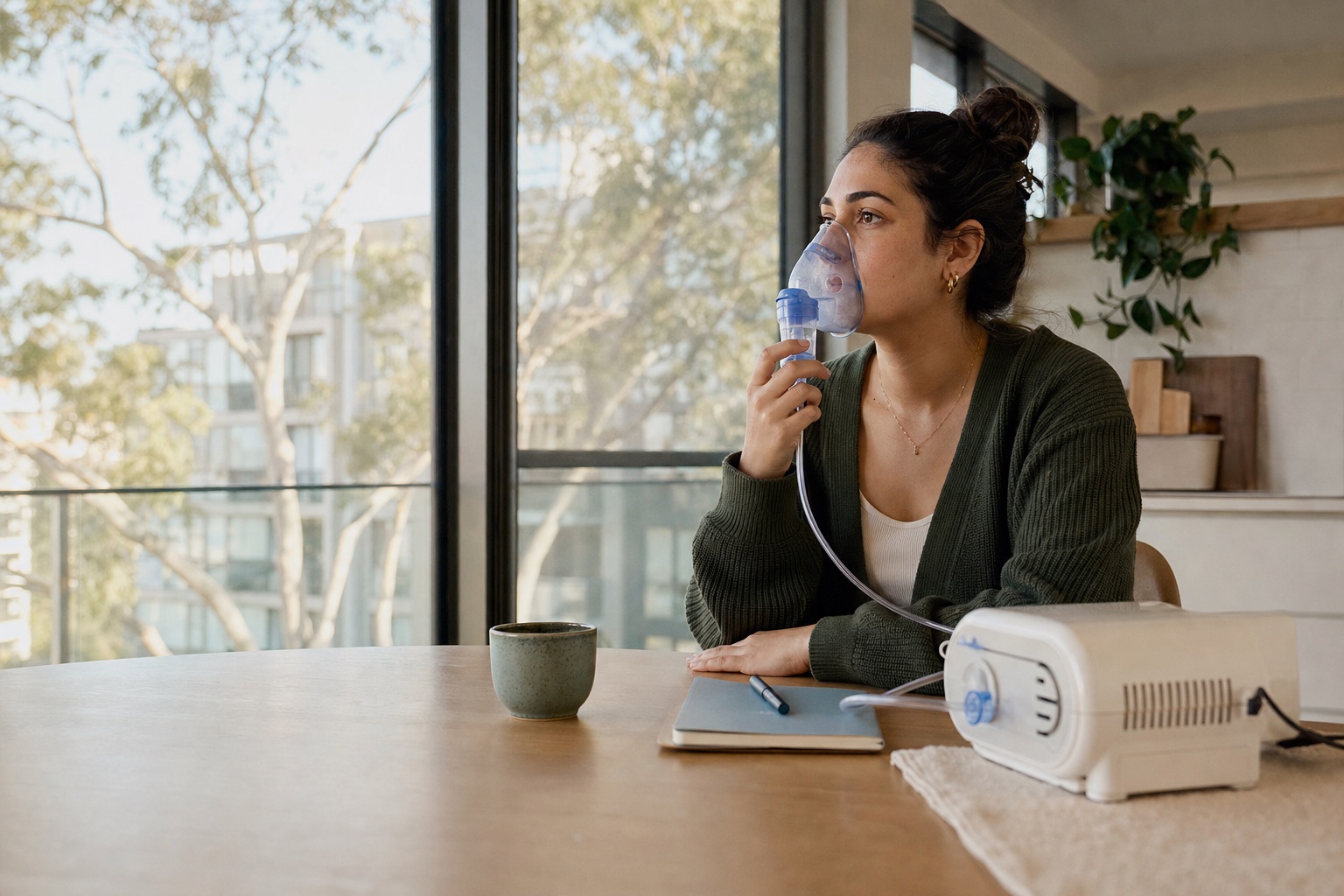
Make the next care-plan action clear—what is due today, what has been completed and what needs attention.
Let patients and parents capture questions, changes and concerns naturally, including by voice, and structure them for review.
Escalate the right concern with its source, recent care context and a clear owner—so the CF team can review and decide.
See how voice, medication workflows, symptom capture, structured registry data and nurse escalation fit together in one bounded pilot.
Explore the CF pilot modelAccessible by design
ArioMed is designed to meet people through a channel they can actually use—from documents and digital forms to a simple voice conversation. This could help an older person, someone with limited mobility, or a person who finds apps difficult remain connected to their care.
The larger vision
We're starting with voice-first, bounded workflows for specialist teams—then building a trusted coordination layer that helps care continue across people, systems and every moment in between.
Founded by Shahin Tabary—an enterprise software builder with experience in digital health and e-prescribing, and lived experience as a parent in the CF community.
Start a conversation
Request a pilot or a focused 30-minute review. We're looking to work with NSW hospitals, CF teams, specialist clinicians, researchers, potential co-founders and aligned investors.